How AI Recipe Generators Actually Work
Anyone who has typed “recipes with chicken spinach cream” into a search engine knows how that goes: pages that require three more ingredients you don't own, buried under a thousand words of somebody's grandmother. An AI recipe generator starts from a different premise — and the difference is worth understanding before you cook from one.
Search retrieves; a generator composes
Search engines are retrieval systems: they find existing recipes, written for someone else's kitchen, and hope one of them happens to match yours. A generator is a composition system: your ingredients, pantry staples, and preferences are the constraints, and the recipe is written to fit them — every ingredient accounted for before a single step is written.
That's why the result feels different in practice. Retrieval asks “which of these is closest to what you want?”; composition asks “given what you have, what's the best thing to cook?”
The three problems solved at once
A good generated recipe has to clear three bars simultaneously, and this is where most attempts historically failed:
- Fit — use what you listed, not what a store assumes you have.
- Coherence — pairings that actually work: fat, acid, aromatics, timing.
- Arithmetic — portions that add up and nutrition you can act on.
What the model actually does
Modern recipe generators are language models trained on vast amounts of cooking text — technique, flavor pairings, timing conventions, nutrition knowledge. Your prompt becomes a structured request, and crucially, the output is constrained: the model must return a complete specification — a title, ingredients with amounts, steps with durations, servings, and nutrition — not free-form prose.
That constraint matters more than the model's creativity. A recipe is a spec, not a poem; forcing the output into structure is what turns a fluent sentence like “simmer until done” into “simmer 12–14 minutes until the sauce coats a spoon.”
Why nutrition estimates vary
Honesty section: generated nutrition is an estimate, not a lab measurement. Calories and macros depend on brands, cuts, and how faithfully you follow the amounts. PantryGen prints them so you can plan your day — but for strict clinical needs, labels and a dietitian still win.
Where you stay in charge
The generator is a starting point with an unusually good memory: tell it the sauce should be lighter, the heat higher, the portions bigger, and it rewrites the recipe with the rest intact. The taste test remains yours — the AI just means you never start from zero, or from somebody else's grocery list.
Retrieval gave us recipes for other kitchens. Composition gives us recipes for our own — the ingredients in the prompt are the ingredients in the pan.
Try these recipes
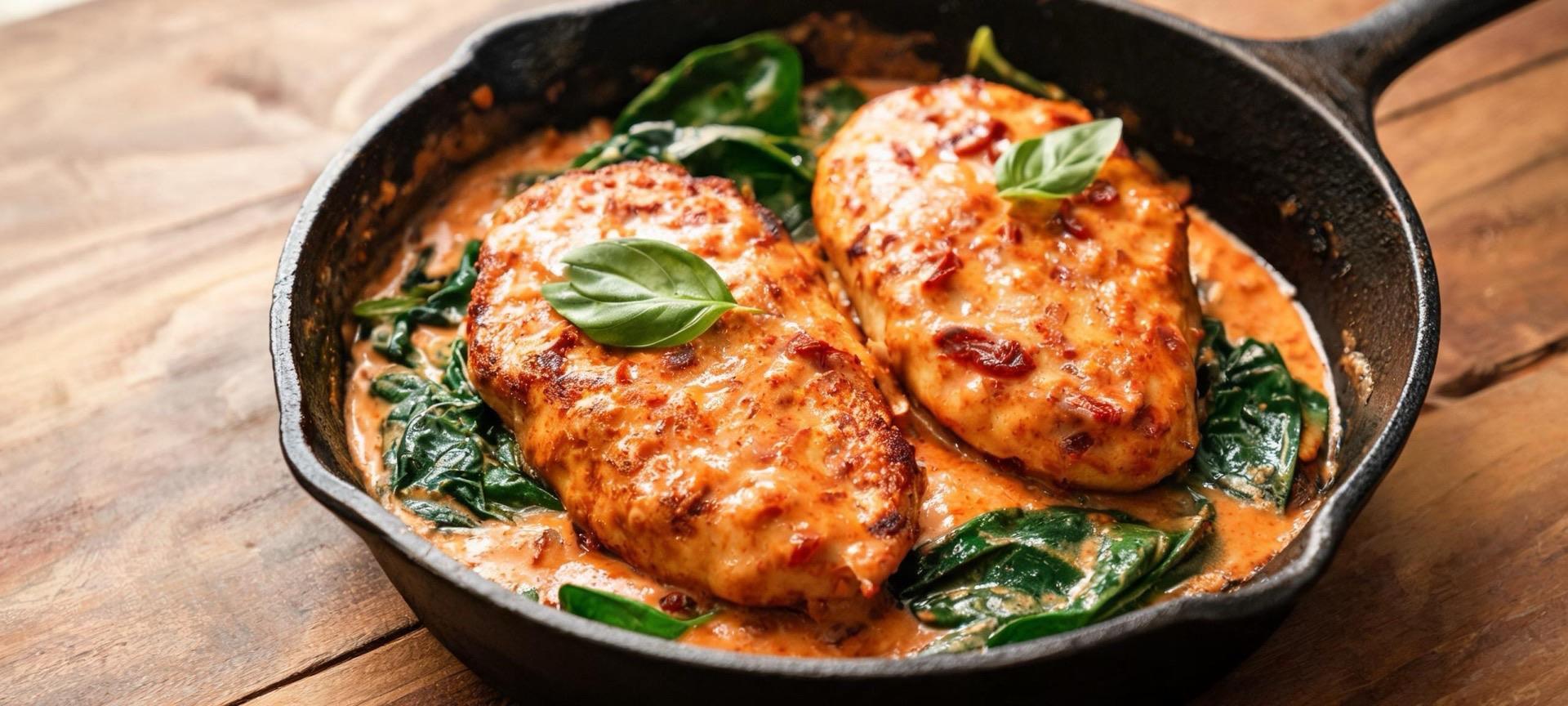
Garlic Basil Tuscan Chicken
Seared organic cutlets smothered in sun-dried tomato velvet cream with wilted wild spinach and cracked peppercorn.
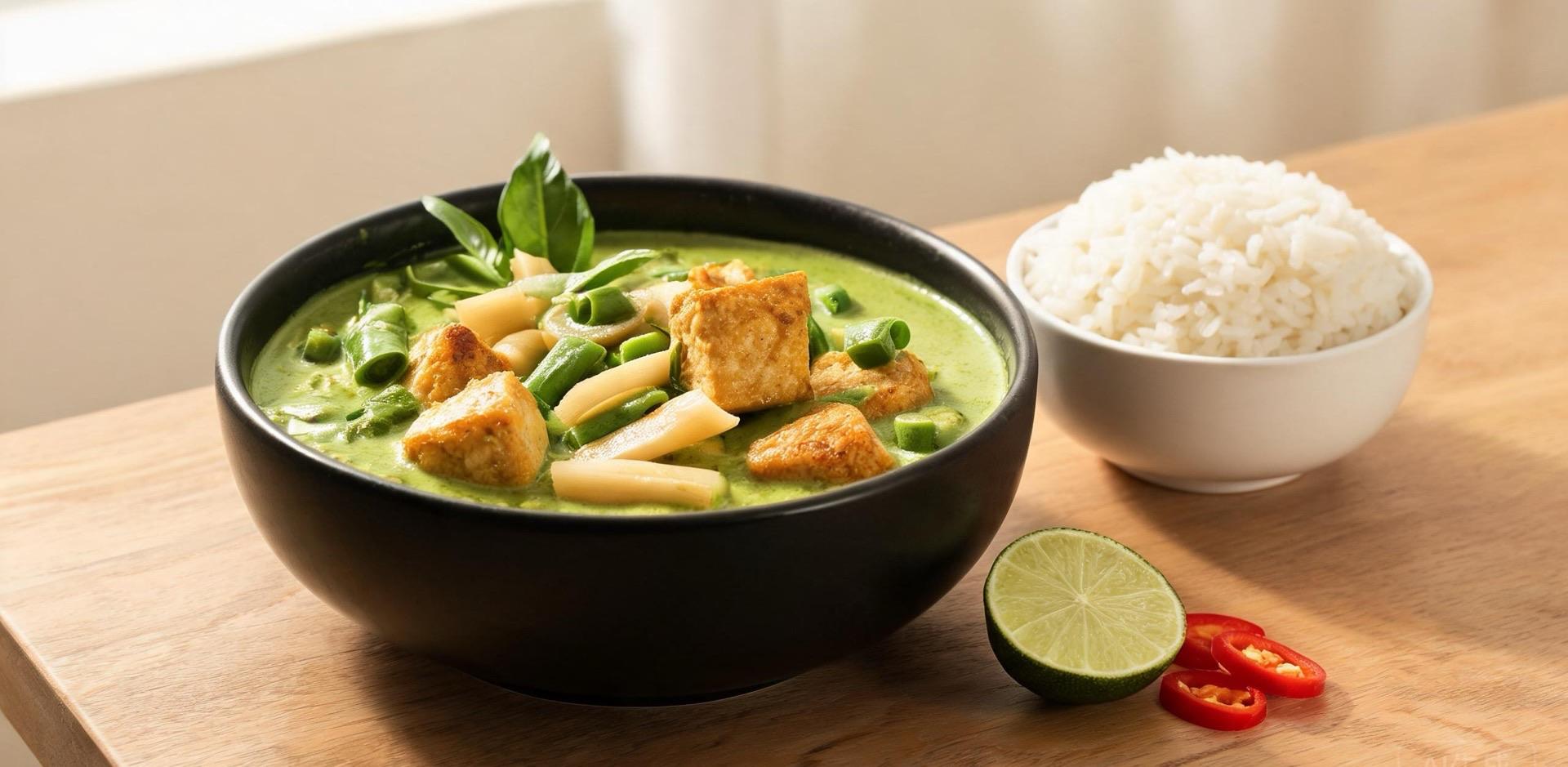
Thai Green Coconut Curry with Crisp Tofu
Aromatic kaffir lime and lemongrass infused coconut broth loaded with organic crisp tofu and snap peas.